
Sunflower Sunday
A Continuation of William Mix's Flowers Series, Including a Study of Vincent Van Gogh's Sunflowers

A few days ago, when I created my last post May Flowers Bloom Forever, I hadn’t realized the bag of my late father William Mix’s artwork marked Flowers series was, in fact, not the only one of that category.
I have to laugh at myself, because I’m not sure, one—why I hadn’t guessed there would be more, and two—why I would not have thought to just glance at what was written on the very next bag, even sitting right in front of me on the desk to my right.
I was too busy scanning material from the first Flowers series bag. Too caught up picking ChatGPT’s knowledge about what kind of flowers some of these reference photos were of.
I finally felt like I had found a small trove that was essentially straight forward and very succinct in the way that many of the studies and drawings were even marked with their own number in the series.
I’m still not done with the last post.
Sometimes I just want to write and get it out here in my own flow of productivity, but I knew at the time notations corelating with each flower ink and crayon drawing are either missing or incomplete. I spent quite a bit of time detailing each image file name on my computer with the correct notations. I still need to edit the properties of each image and re-upload. I told myself I can always go back and edit even after a post is live.
It doesn’t have to be perfect when something like art is simply begging to be channeled. Maybe in the future I’ll have more patience to do everything “right,” and to its completeness before I publish a post to be live. Maybe in the future, I can allow posts to unfurl more in the way flowers do grow.
However, in some way I feel a distinct push from beyond just to get a skeleton of artwork out here… so it is… out here… and then later I can go back and fill in the blanks. Perhaps it is because I know the breadth of my late father’s body of artwork is all one big puzzle—and as for this Flowers series… if I had not seen my father’s further drawings (even ones that chronologically came before the ones in the last post) the entire series would not have made as much sense to me as it does this morning.
I had put pressure on myself to make posts throughout Holy Week for almost every day complete with themes that would be pertinent for the days preceding the day of the Resurrection each year. I only happened to run across all of those religious slides right at the same time. It was a coincidence, actually, but I decided to stand up on that surfboard and ride the wave to the shore, committing to a good amount of output throughout that week and attempting to do justice to some of my father’s religious artwork simultaneously.
I see now how all of this Flowers series was not meant to be included in one, long gallery post to include all of the flowers William Mix had worked during the years he had aged into his early 70s. All of these pieces I am just seeing for the first time, and there might even be more, somewhere—who knows?
As flowers take their own time to bloom as they will, so do these posts of mine.
I do realize I can take my time.
May Flowers can bloom all month long. Seems perfectly apropos that this month is William Mix’s birthday month.
So, today, Sunday, let’s dive into some sunflowers.
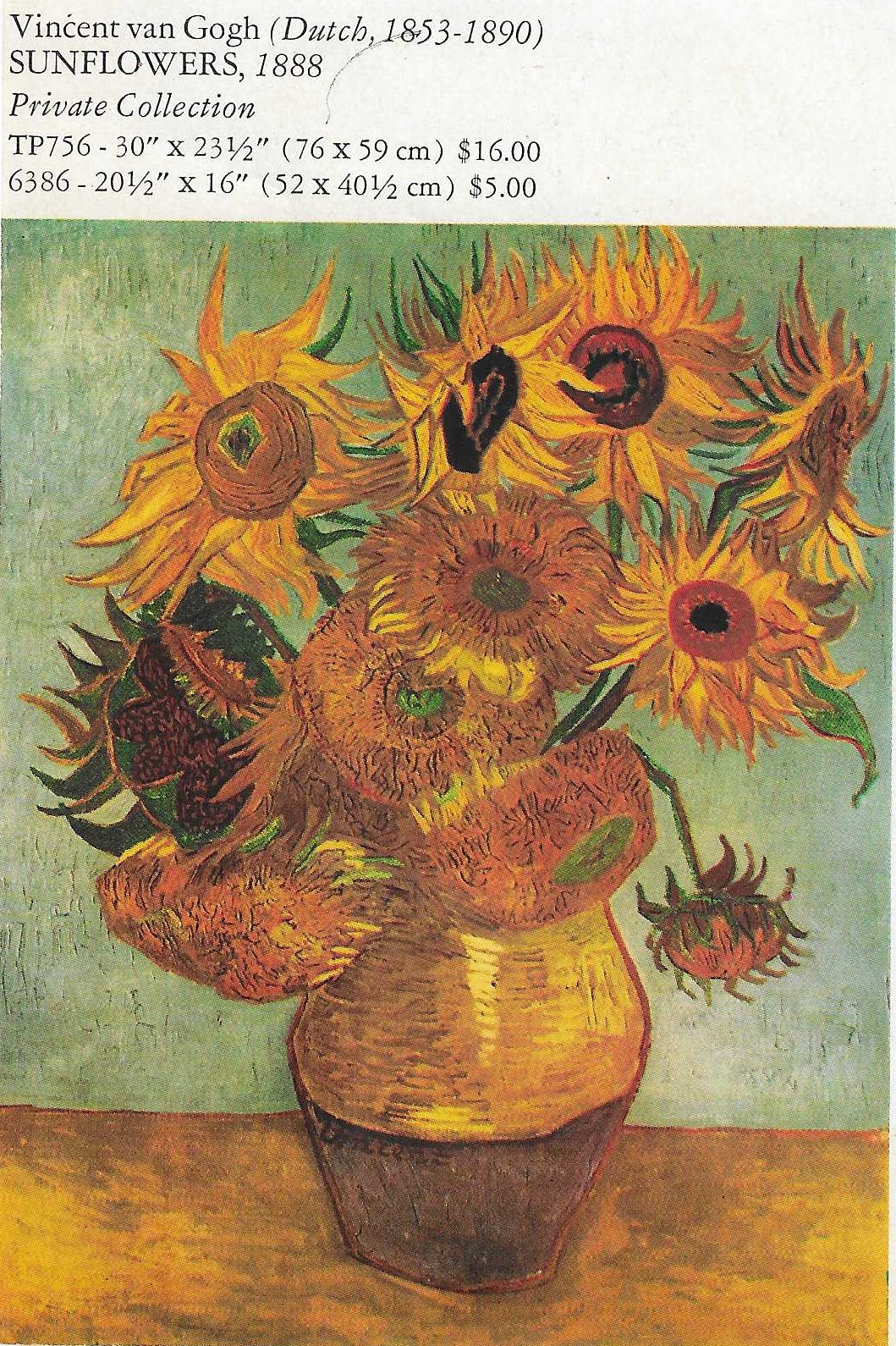
Below is the reference photo for Vincent Van Gogh’s Sunflowers painting I found as a clipping sandwiched in with the transformative drawing my father made of this piece.
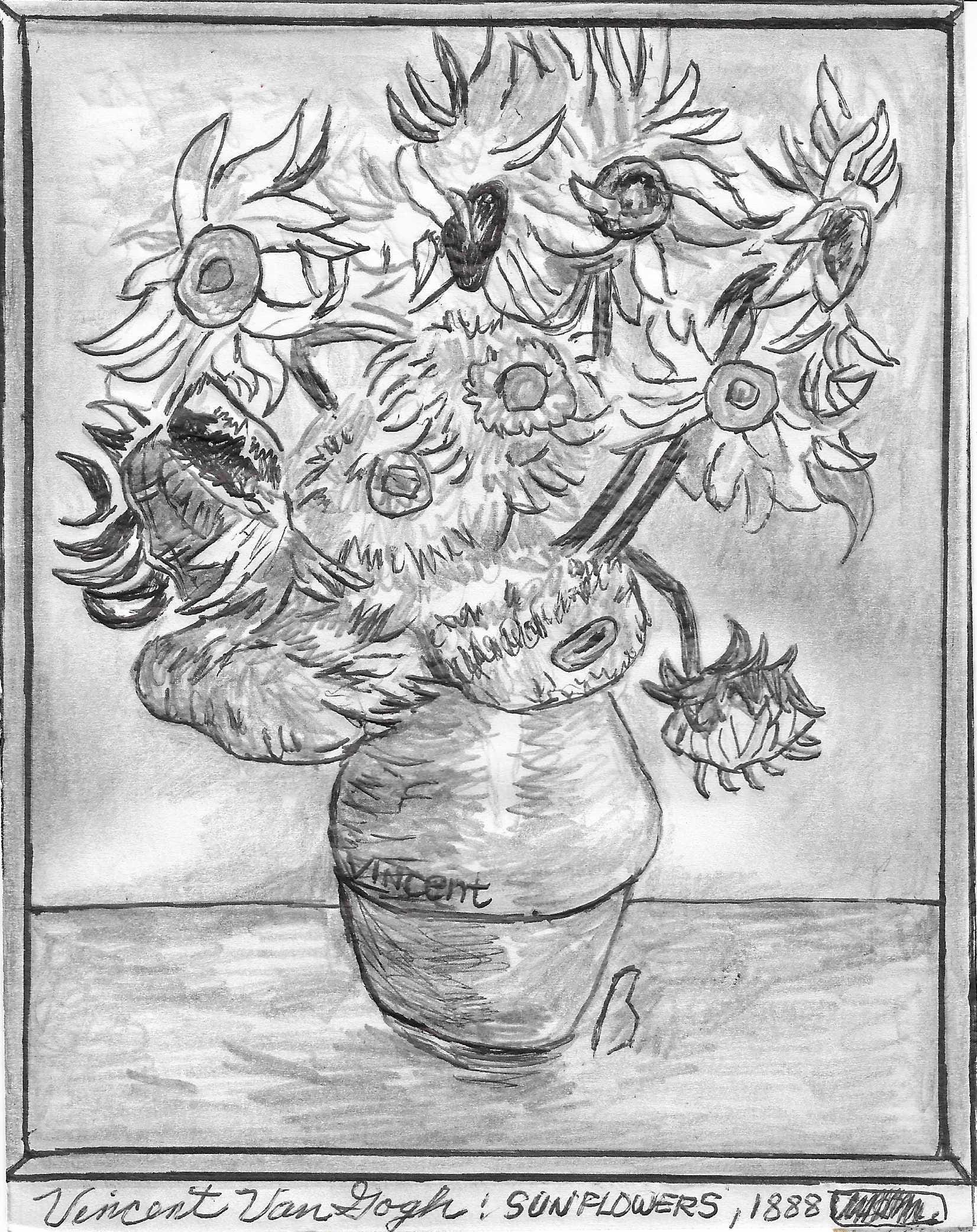
A study, complete with a handmade stencil pack he made from his transformative drawing. In his transformative artwork after other great artists, you might start to notice a particular style about William Mix’s artwork and his drawings:
The next image is the above drawing flipped to read the reverse side and my father’s notations.
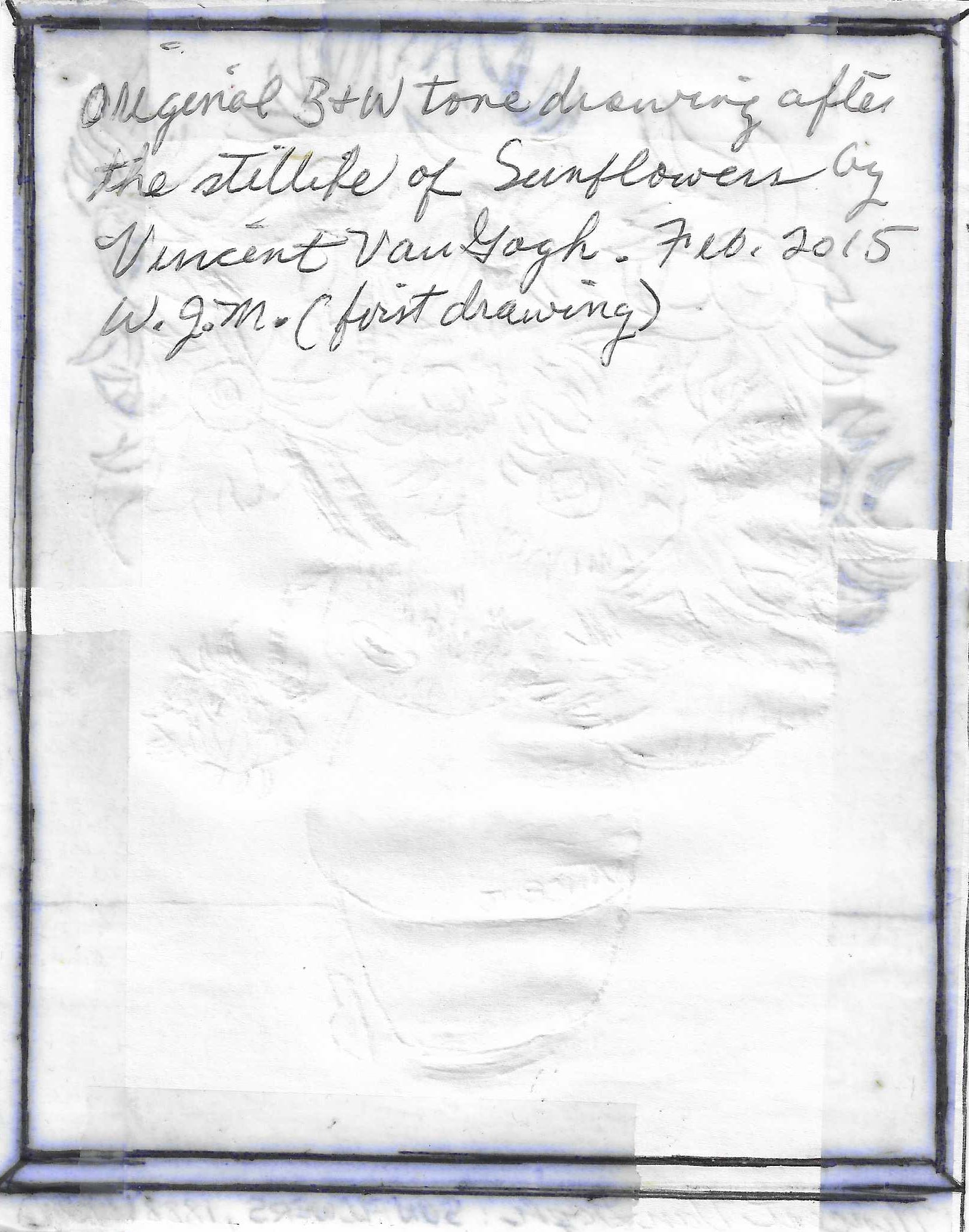
He writes “original B+W tone drawing,” and it may have been original, meaning, he did not trace Van Gogh’s work. This drawing was William Mix’s impression of Van Gogh’s Sunflowers. At the time, the term for transformative art was not in my father’s vocabulary, but I believe that better describes what we have, here. The above is a transformative black and white tone drawing after the still life of Sunflowers by Vincent Van Gogh. William Mix completed this drawing exactly one year before he would unexpectedly require brain surgery.
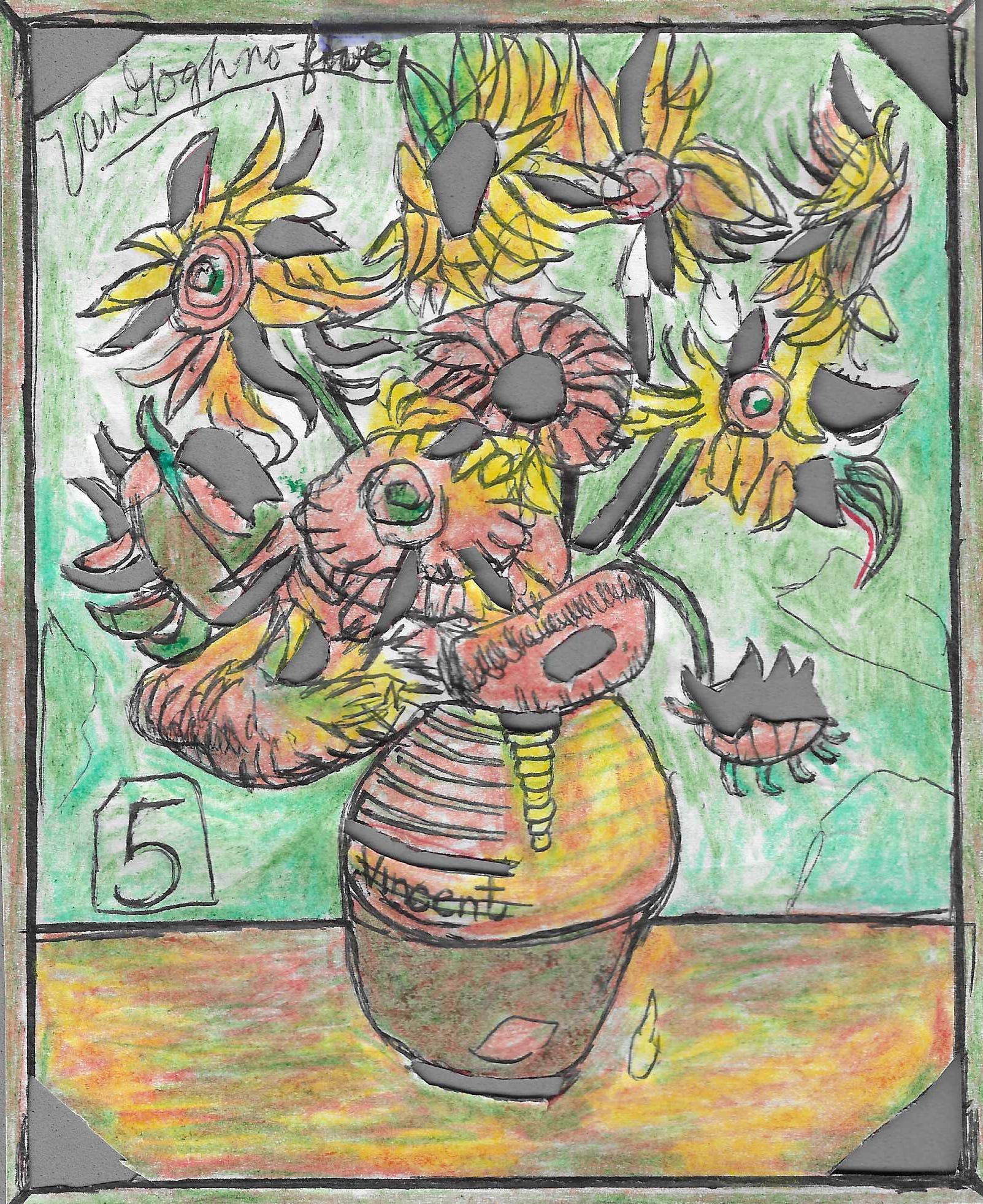
The following image is a peek at number 5 in William Mix’s stencil pack he created from his transformative drawing after Van Gogh’s Sunflowers. His creation of 6-8 stencils very different from one another for any given drawing was a basis for continuing the drawing in the future. It was a sign of his optimism to continue further color renditions of each work or study. This stencil is the one that had the most color, and that is why I chose it—because it seems he did not create a full color transformative drawing for this study, unless I happen to find it somewhere else amongst his collection. This would be a representation of what colors hues he was leaning toward for his first full color drawing to come:
The following image is a photograph my father captured with his own camera and used it as a reference for his own sunflower study. The year was 1995, which would have put me in about the 7th grade. Still very innocent, but beginning to spend a lot of time in my bedroom with my door closed, writing poetry and listening to Smashing Pumpkins, Alice in Chains or Nirvana, among others.
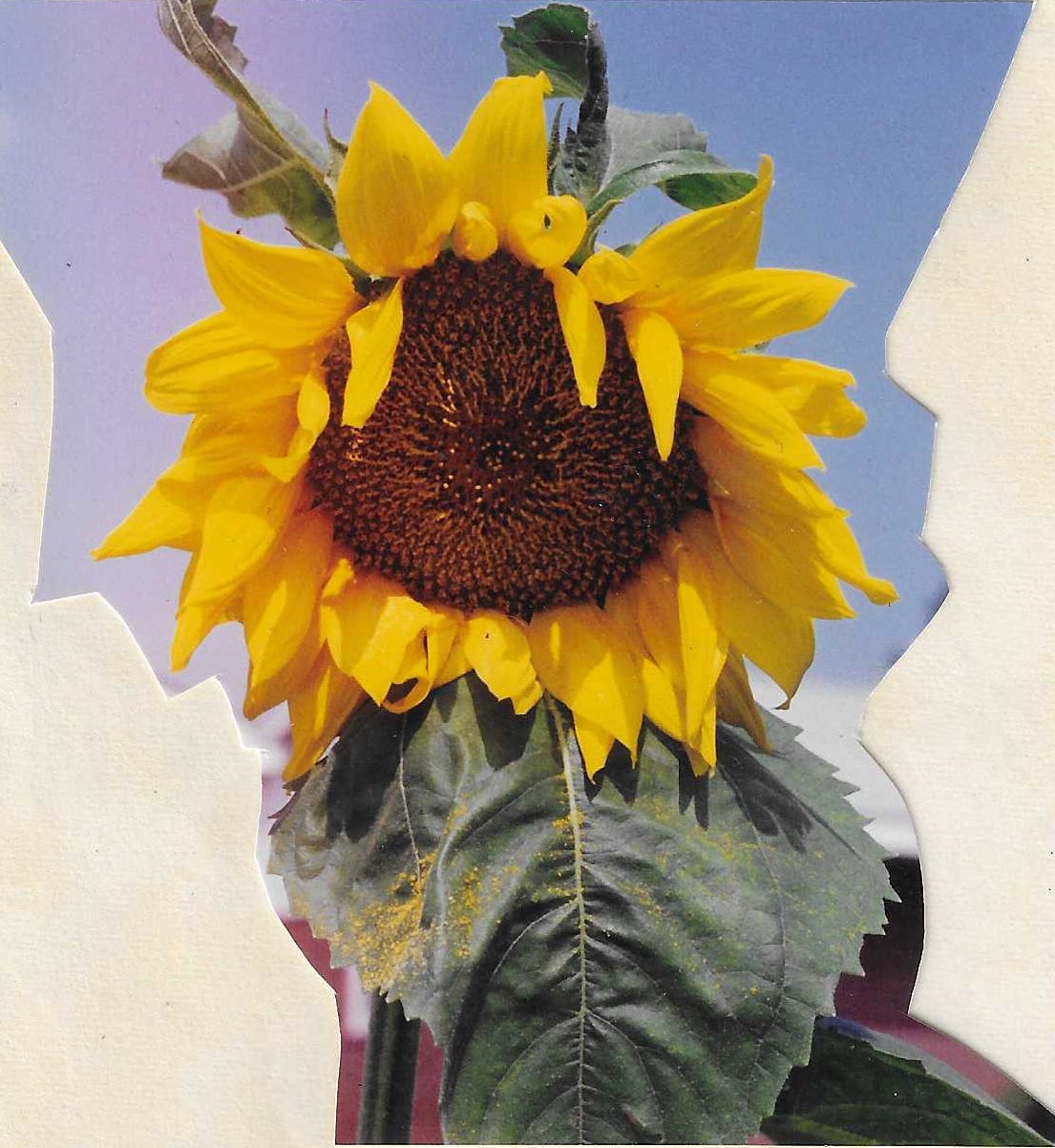
I can only assume the flower drawings, both monochrome and prismacolor pencil, to follow would have been done around that same year, until we scroll down to the drawing marked WM ‘06. At that time I would have been graduated already from high school by six years. My father would have already spent one exact year homeless and was back, again, for good. It was the year just before I would relocate to St. Augustine.
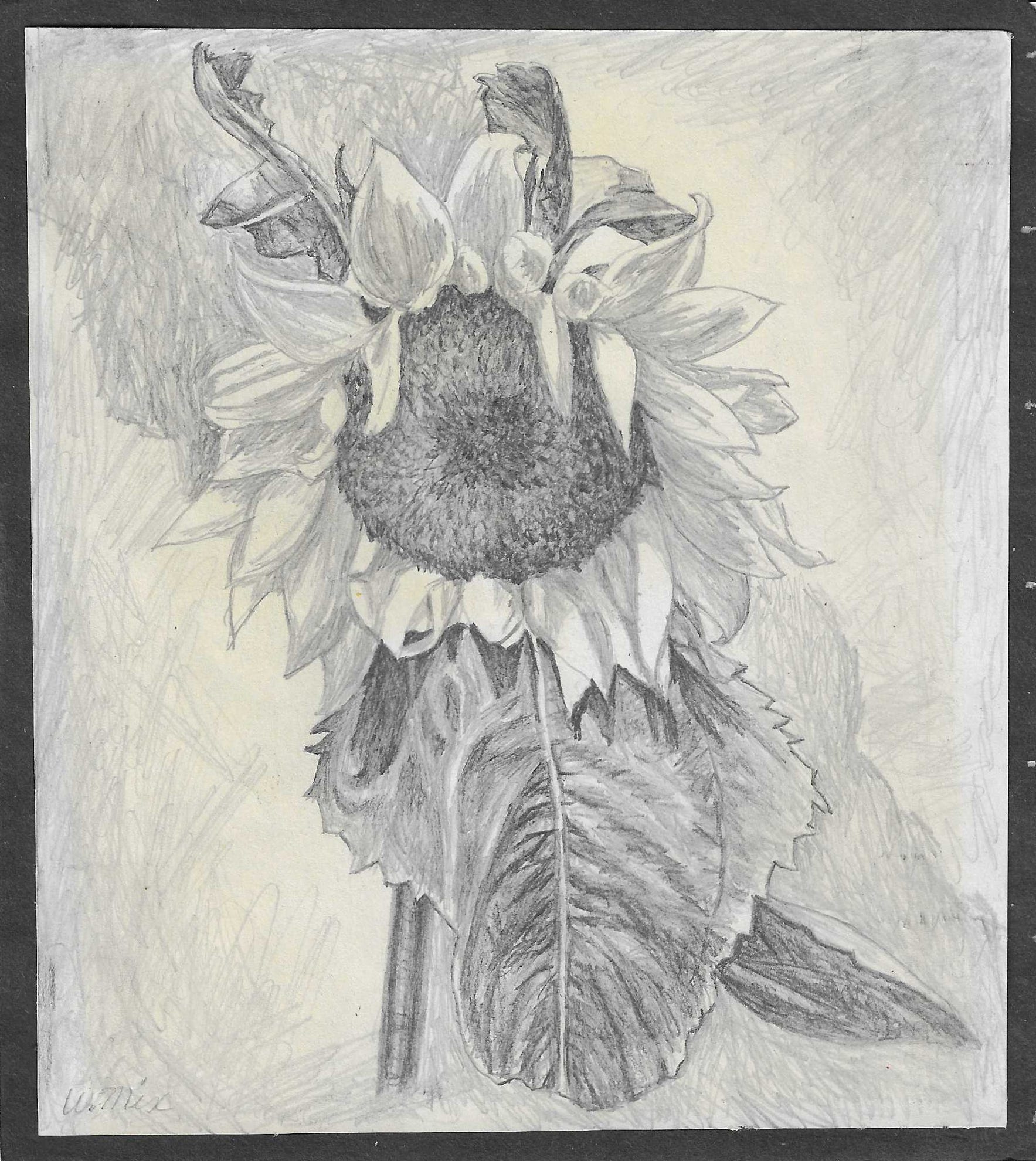
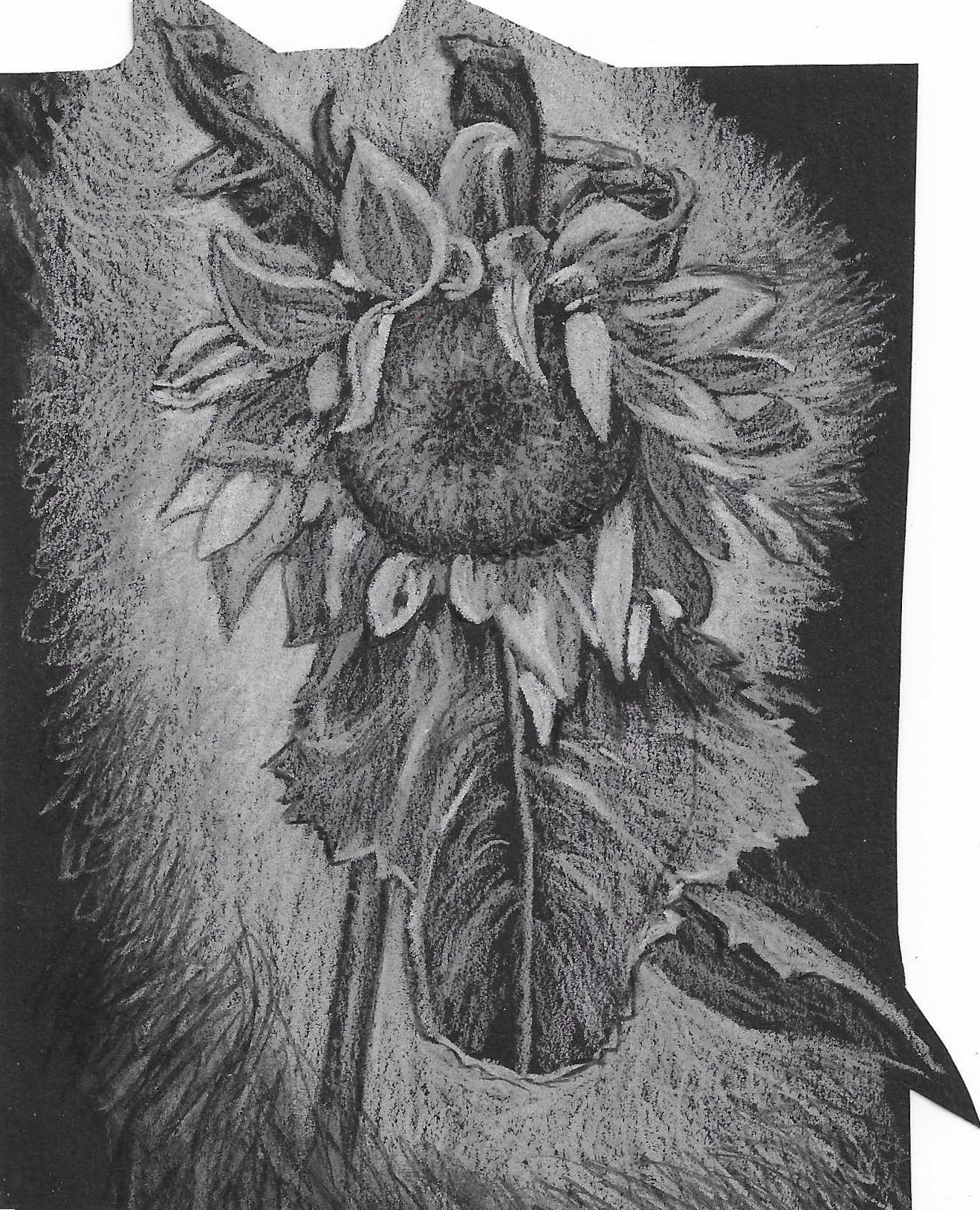
Before last night, I had never seen these small drawings. I thought when I began this post, perhaps I would attribute my own sunflower imagery to this post along with my father’s.
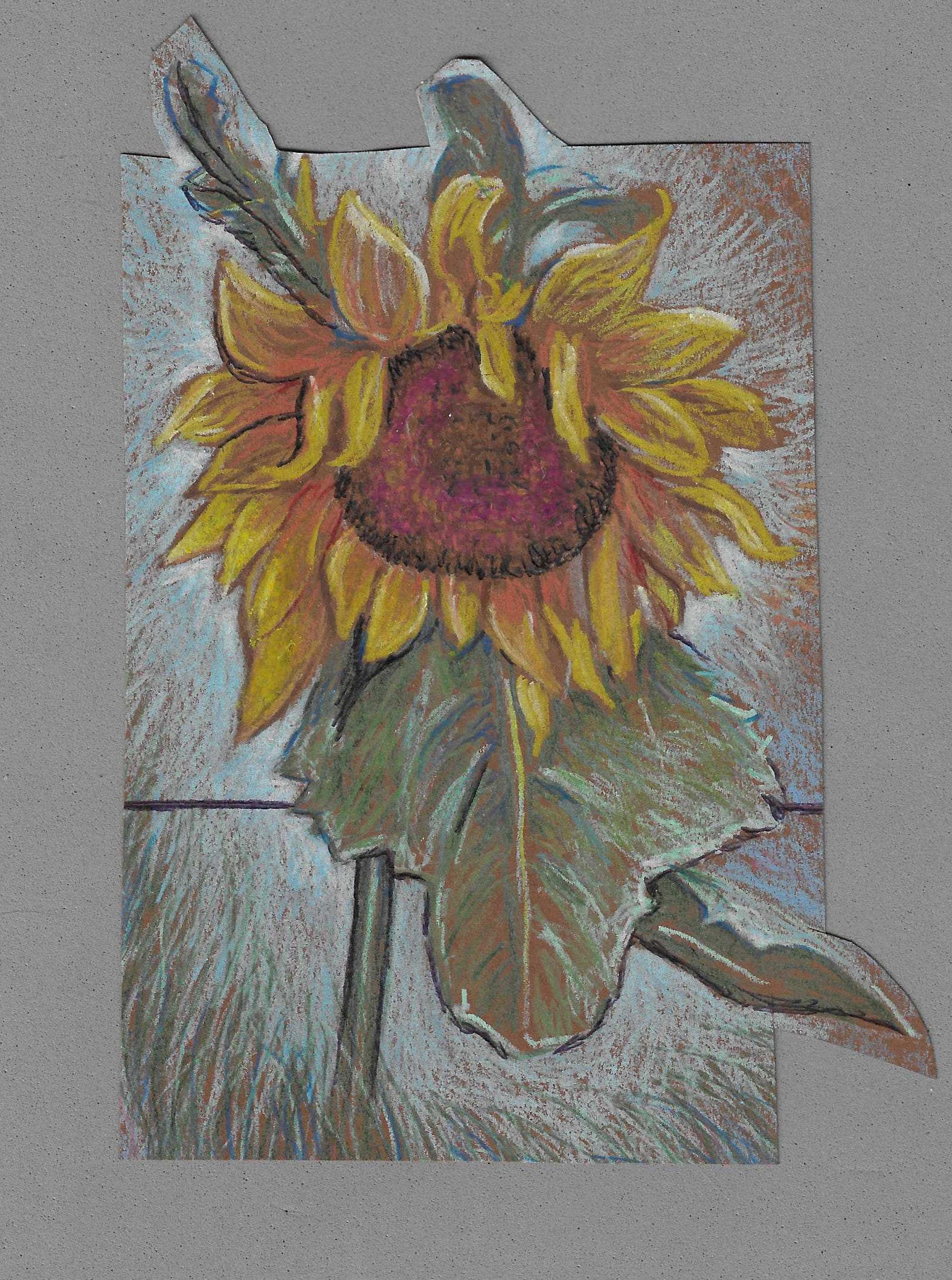
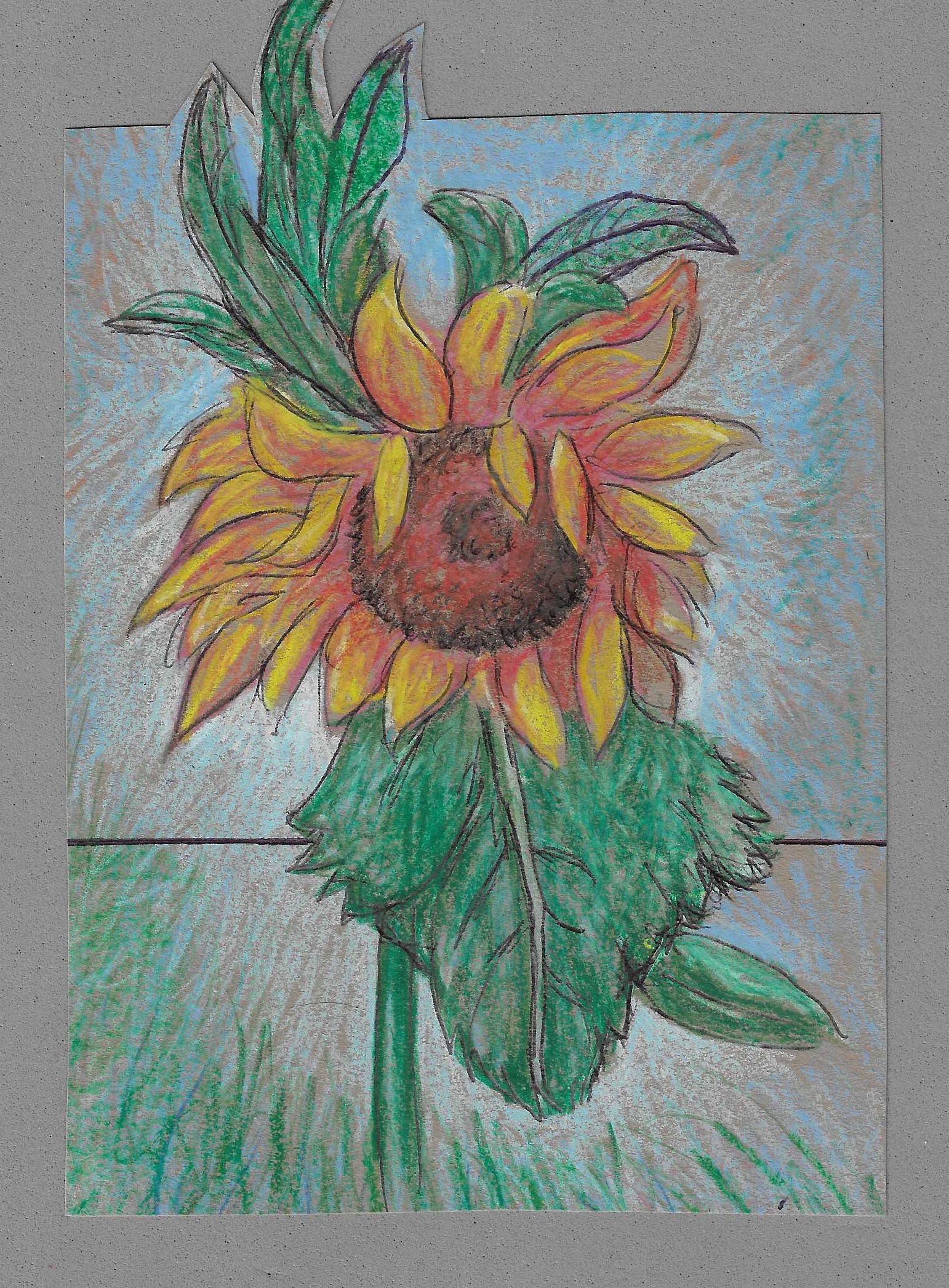
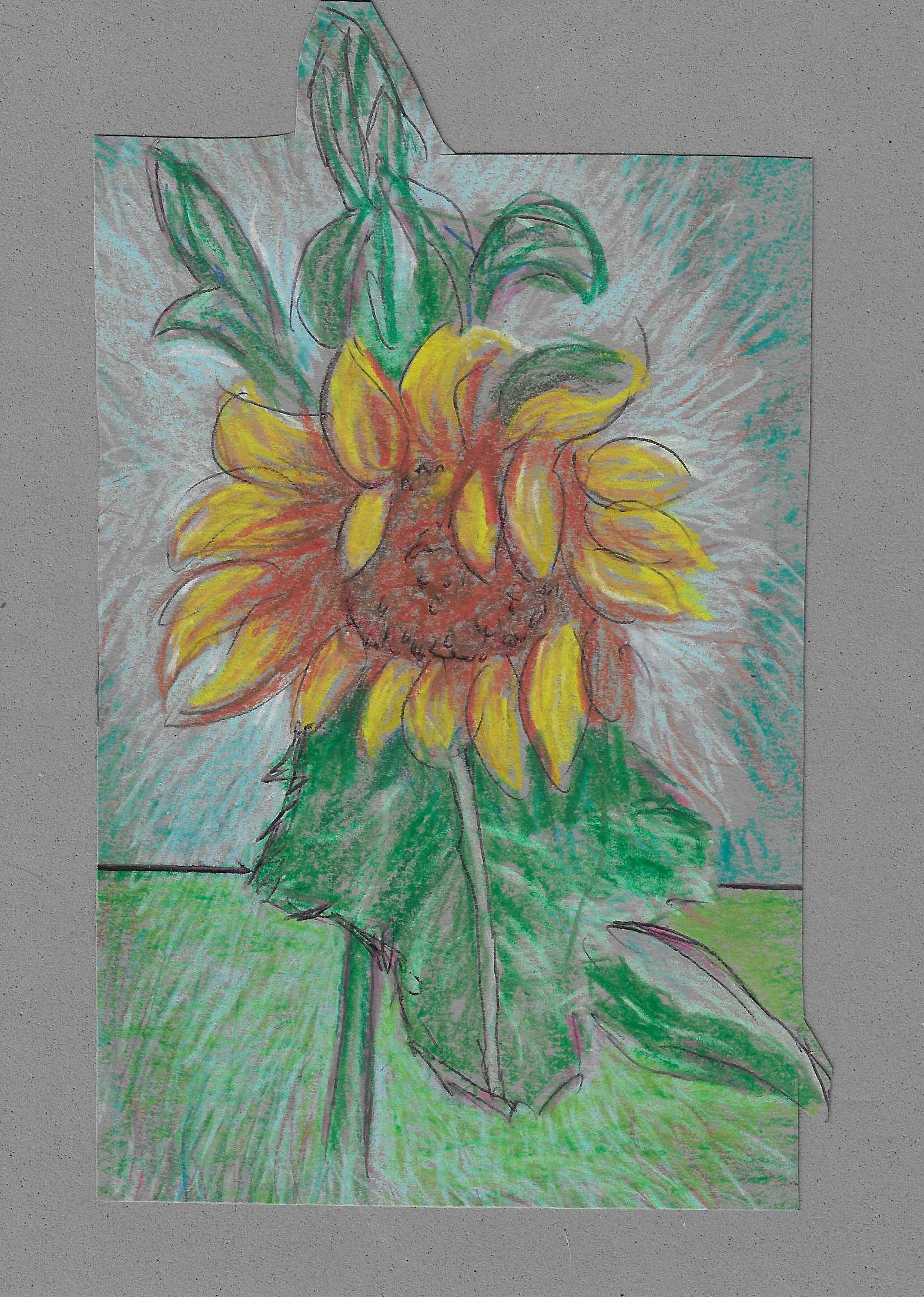
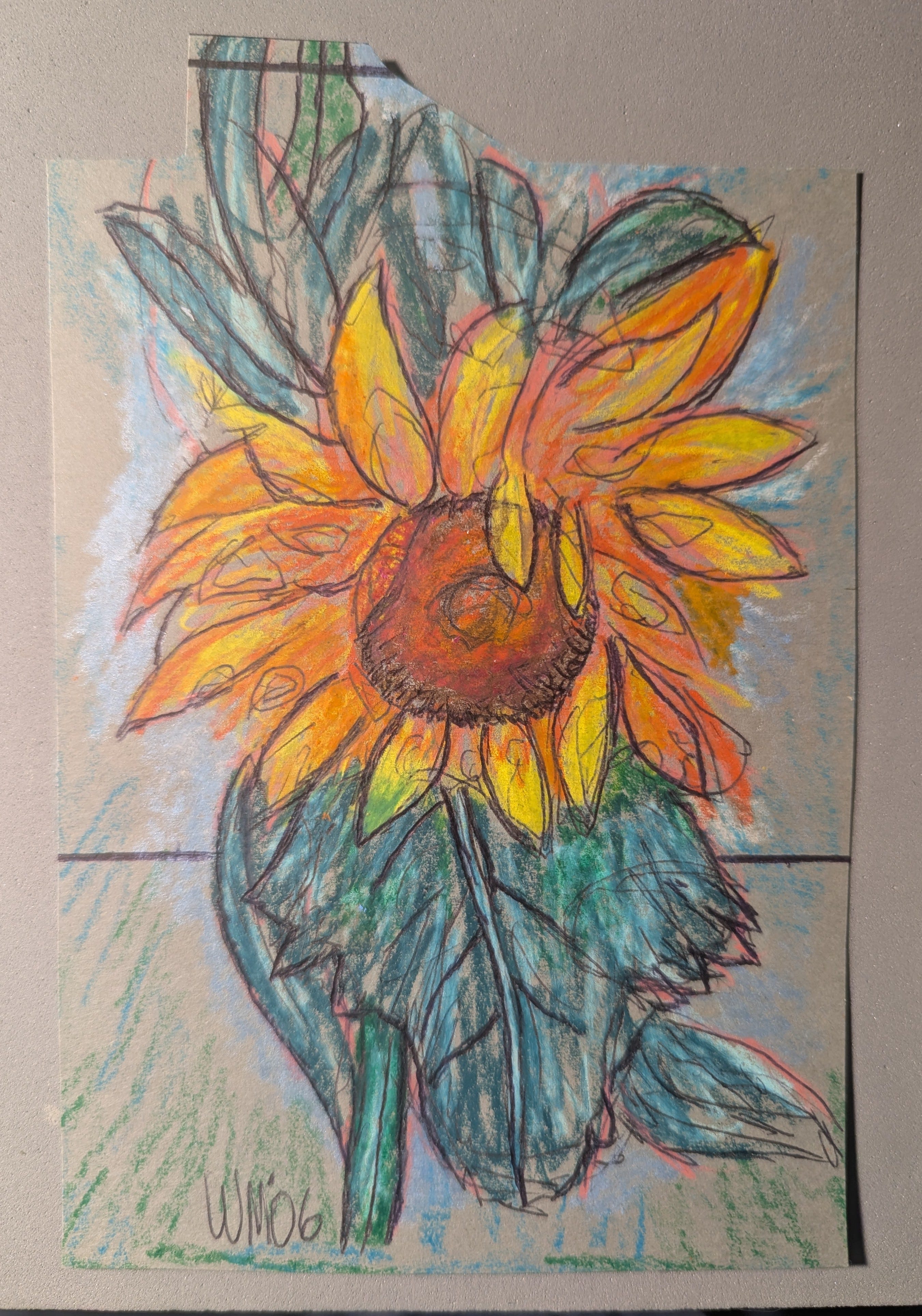
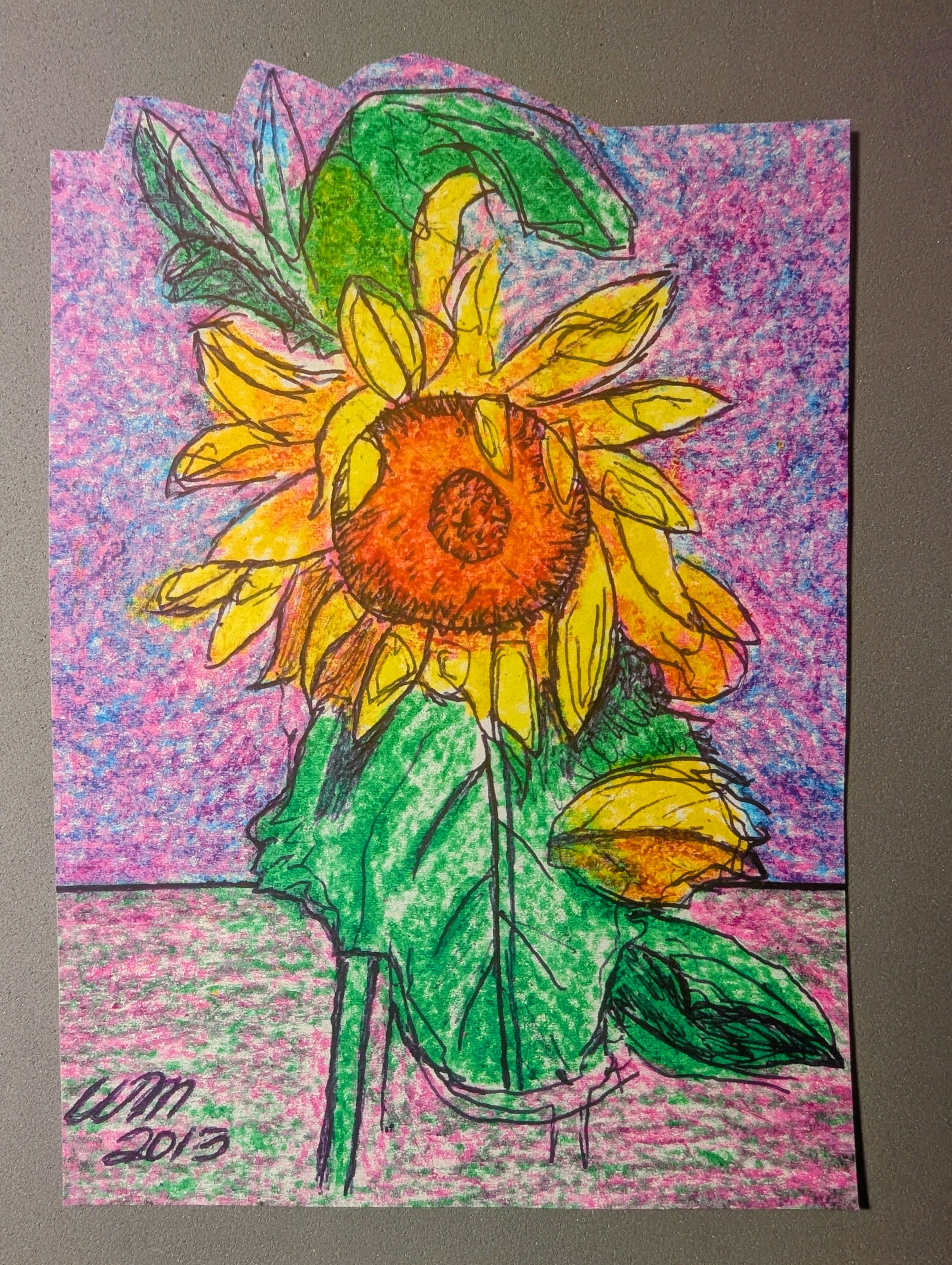
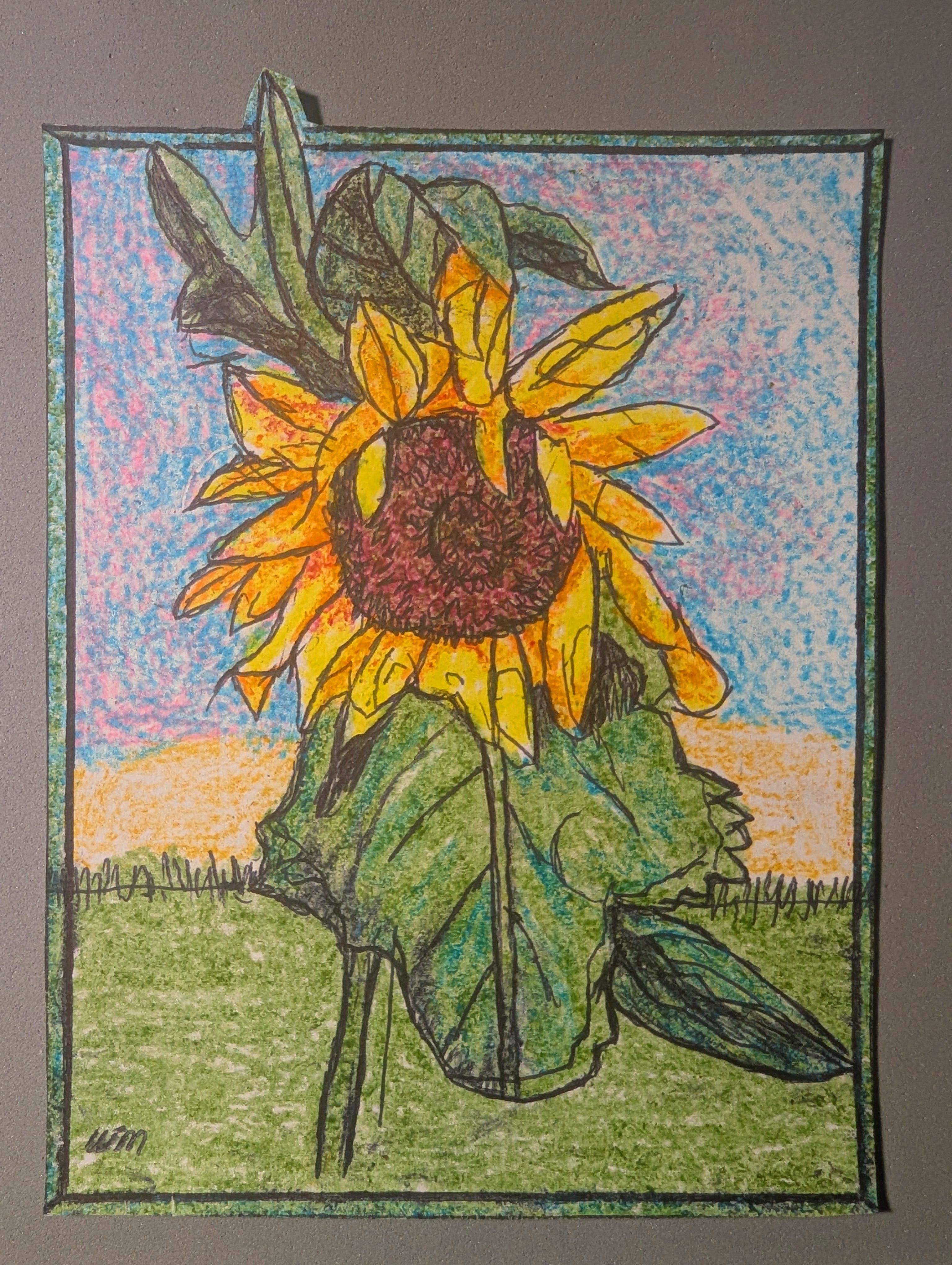
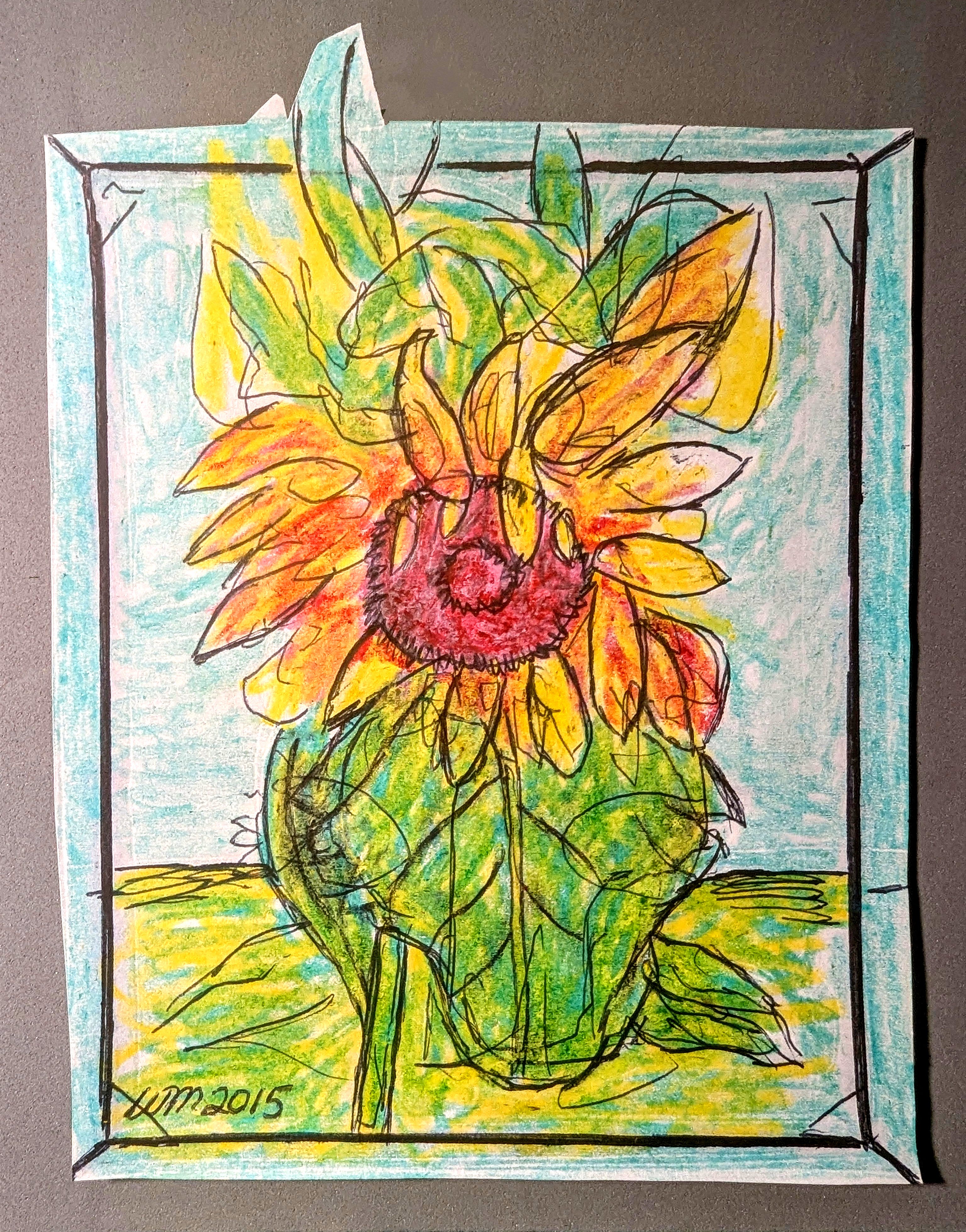
In this moment as I go back, searching my google photos I realize… The last drawing my father completed of The Sunflower was, as you might be able to see above… in 2015.
In the year 2015, specifically in the spring… I had the idea to create a sunflower room outside our sliding glass door. I was living with my parents again just after I was divorced.
My sons and I lived in one bedroom together, there, for quite a while. I wanted to plant sunflower seeds around the perimeter of our small, humble square patio in the back yard, and when the sunflowers grew… there would be a sunflower room for us!
My father never mentioned anything about the sunflowers I grew… but it seems now it might have inspired him just a little to do one more drawing rendition for his Flowers series, this kind of flower study of his he called The Sunflower—and as I’ve heard it described elsewhere, “God’s perfect mistake.”
The following is firstly a shot of one of my sunflowers in the process of blooming which I loved so much I printed the image to canvas, once. I even was moved a few years ago to try to paint it, myself.
I will put an image of my unfinished painting just after my Shy Sunflower photo. The painting is only half-baked. I had only just begun it and had not much experience with acrylic paints. Now the canvas has a couple of puncture wounds from just hanging around, low to the ground in my apartment. Maybe I’ll try again, someday.
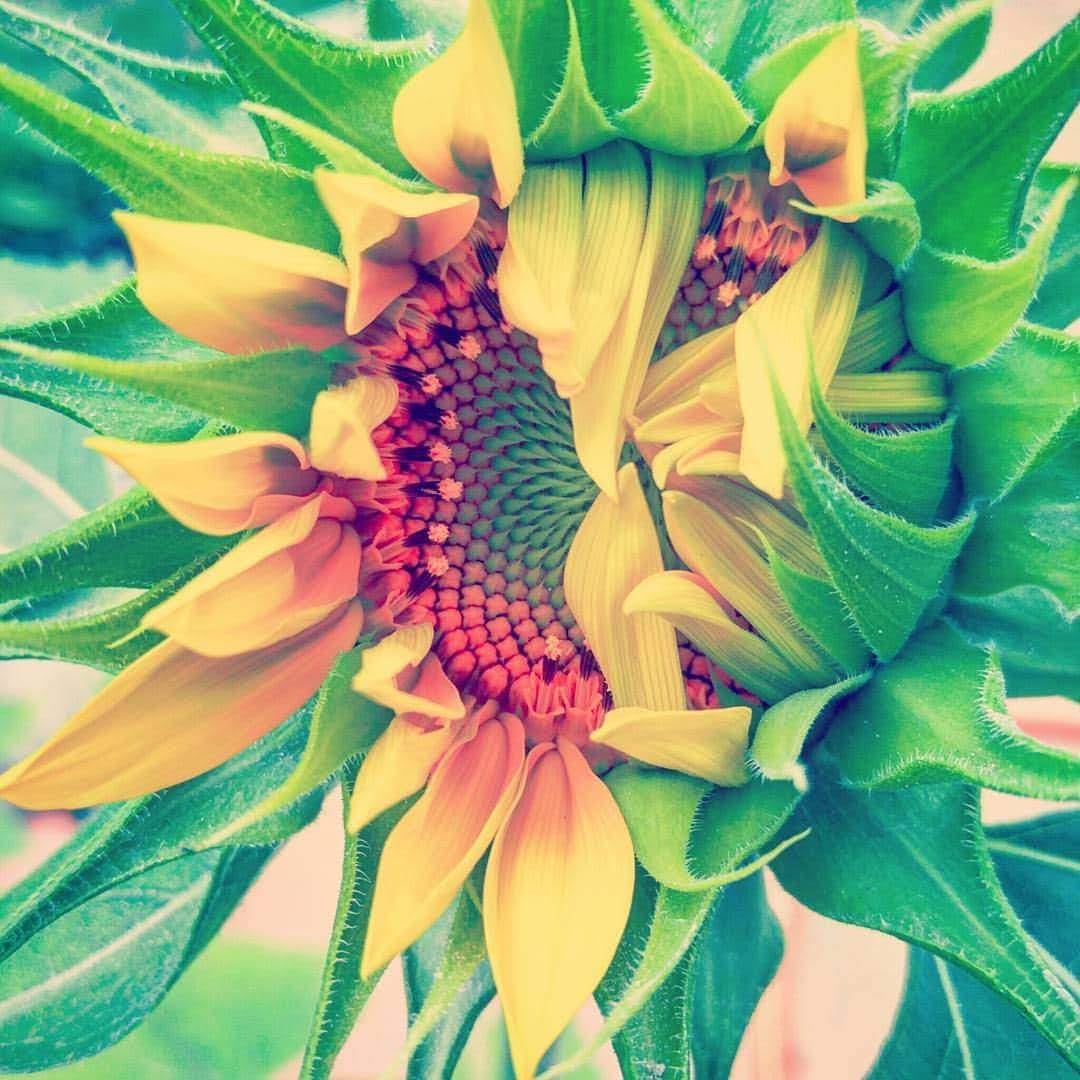
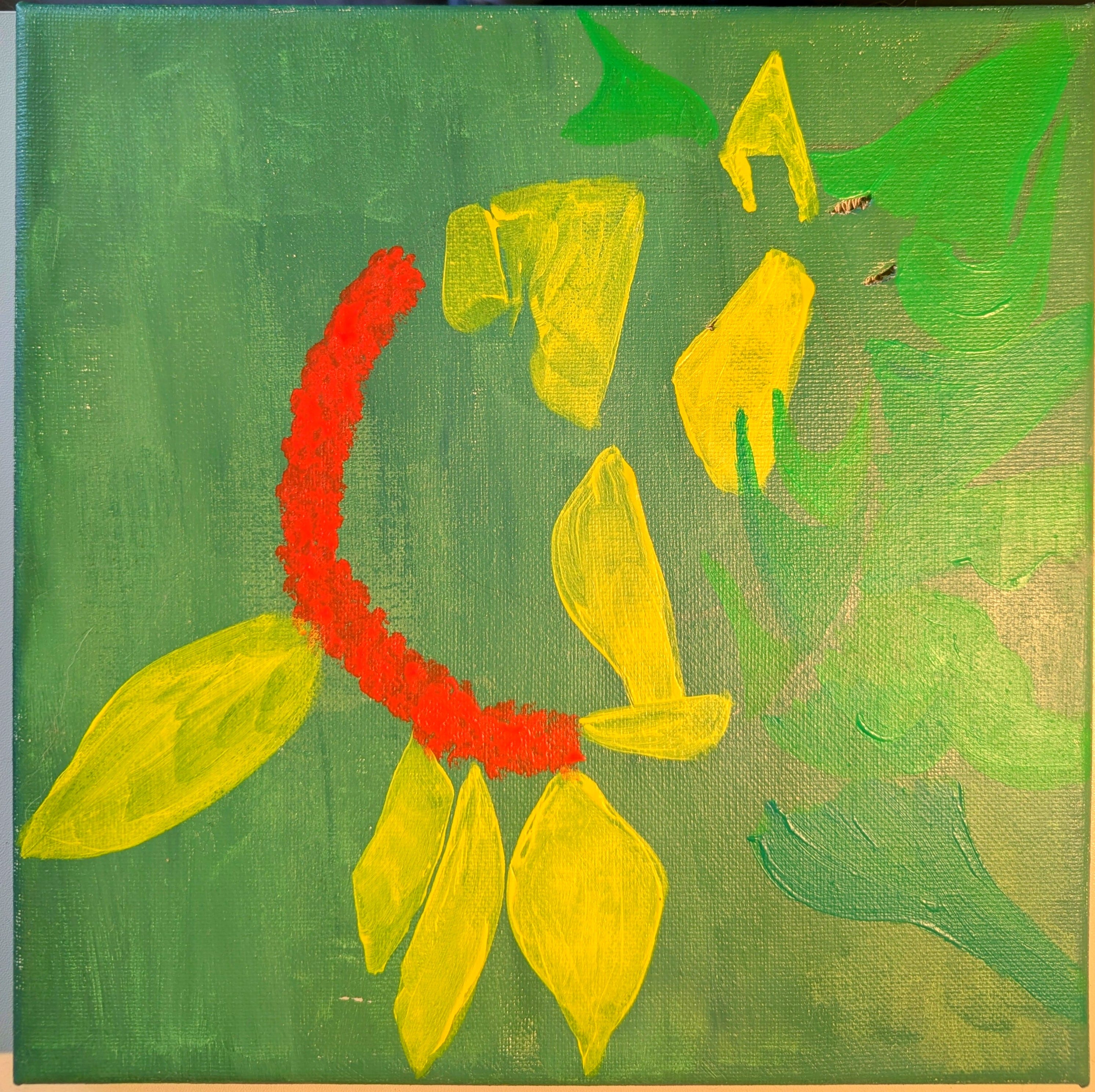
Here I also share some regular unedited snapshots of the sunflowers I grew, and of my children in their early childhood playing just beyond our sunflower room. I spot one bloom that looks a lot like the shape of my father’s The Sunflower.
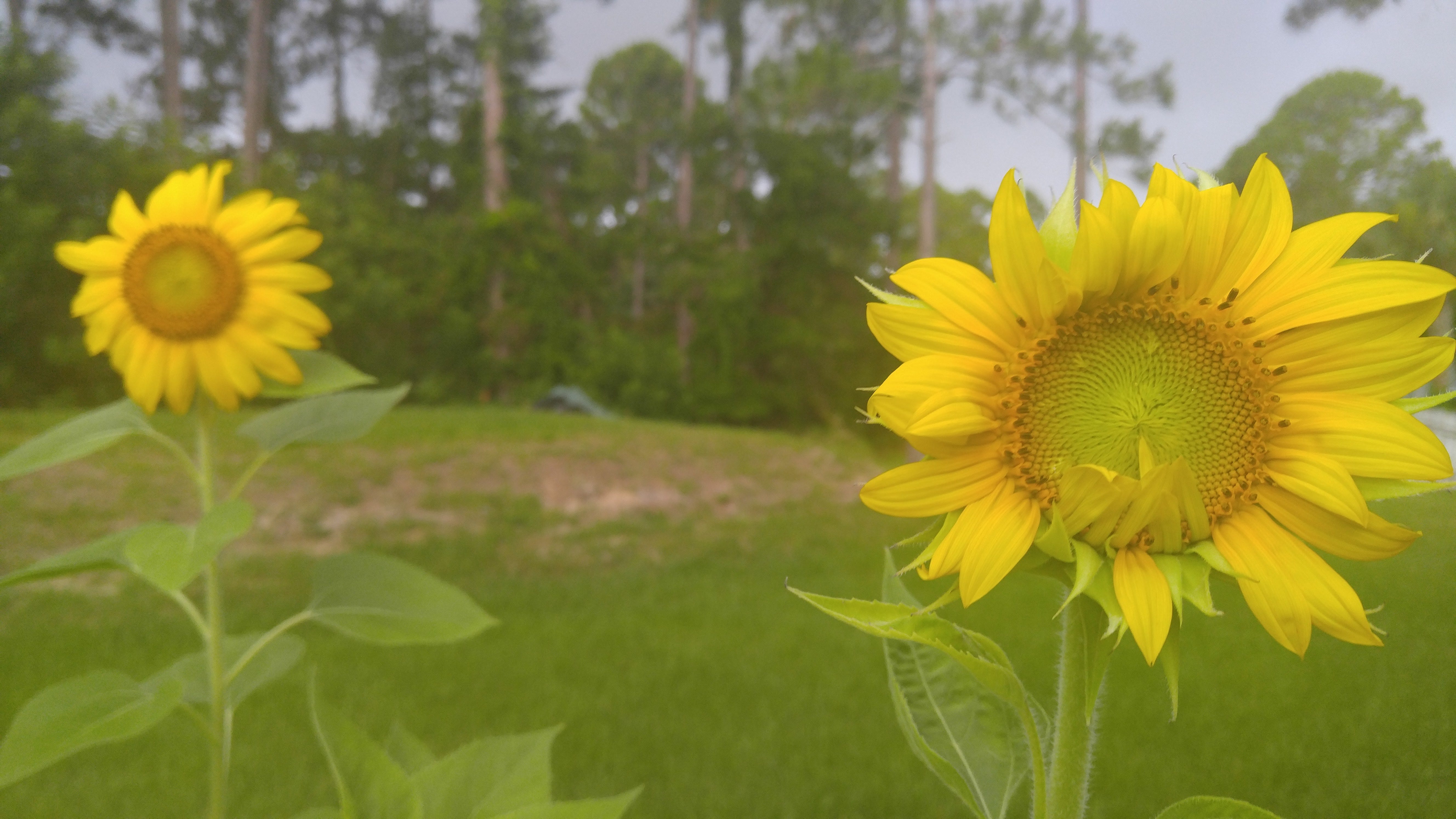
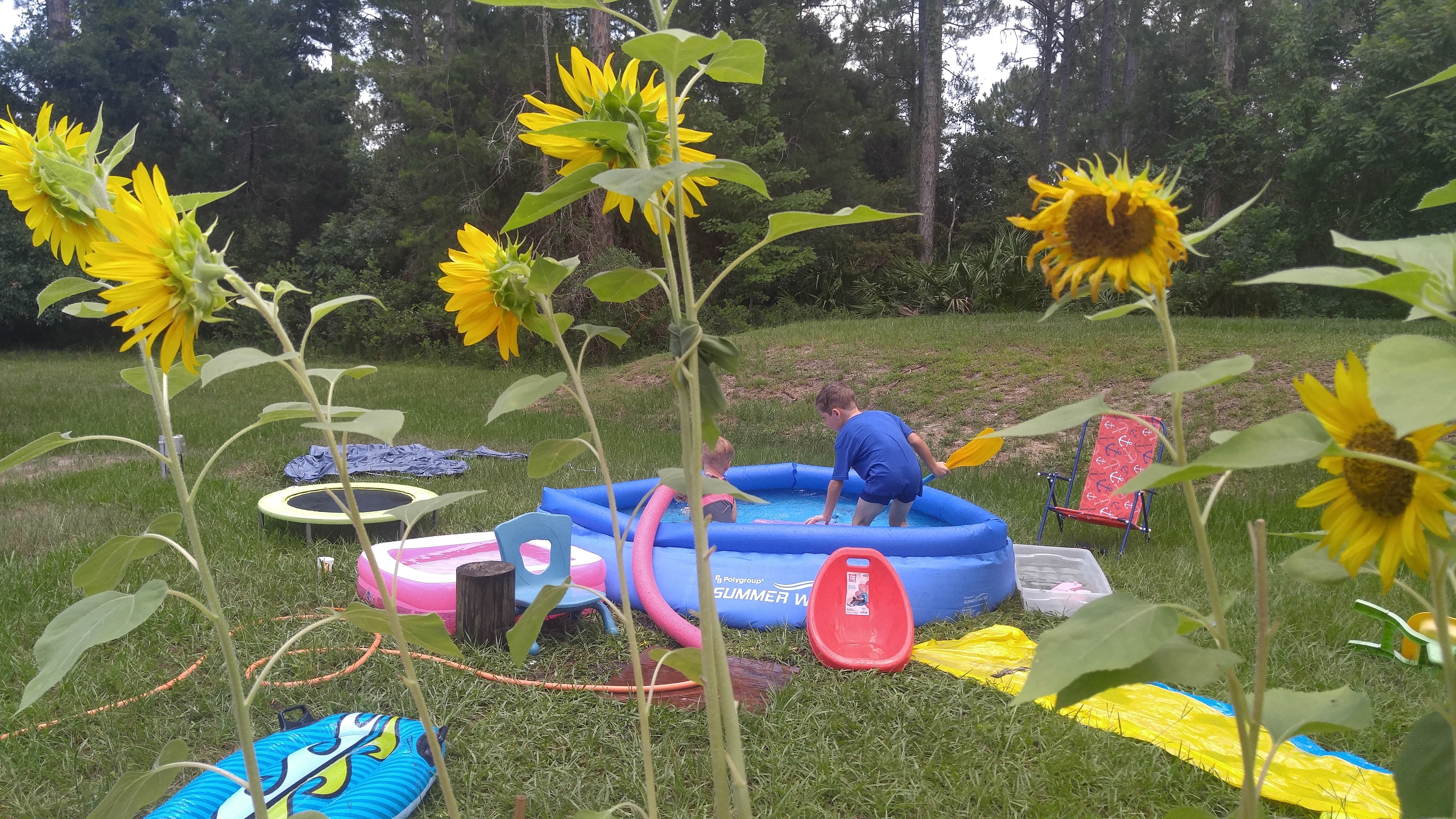
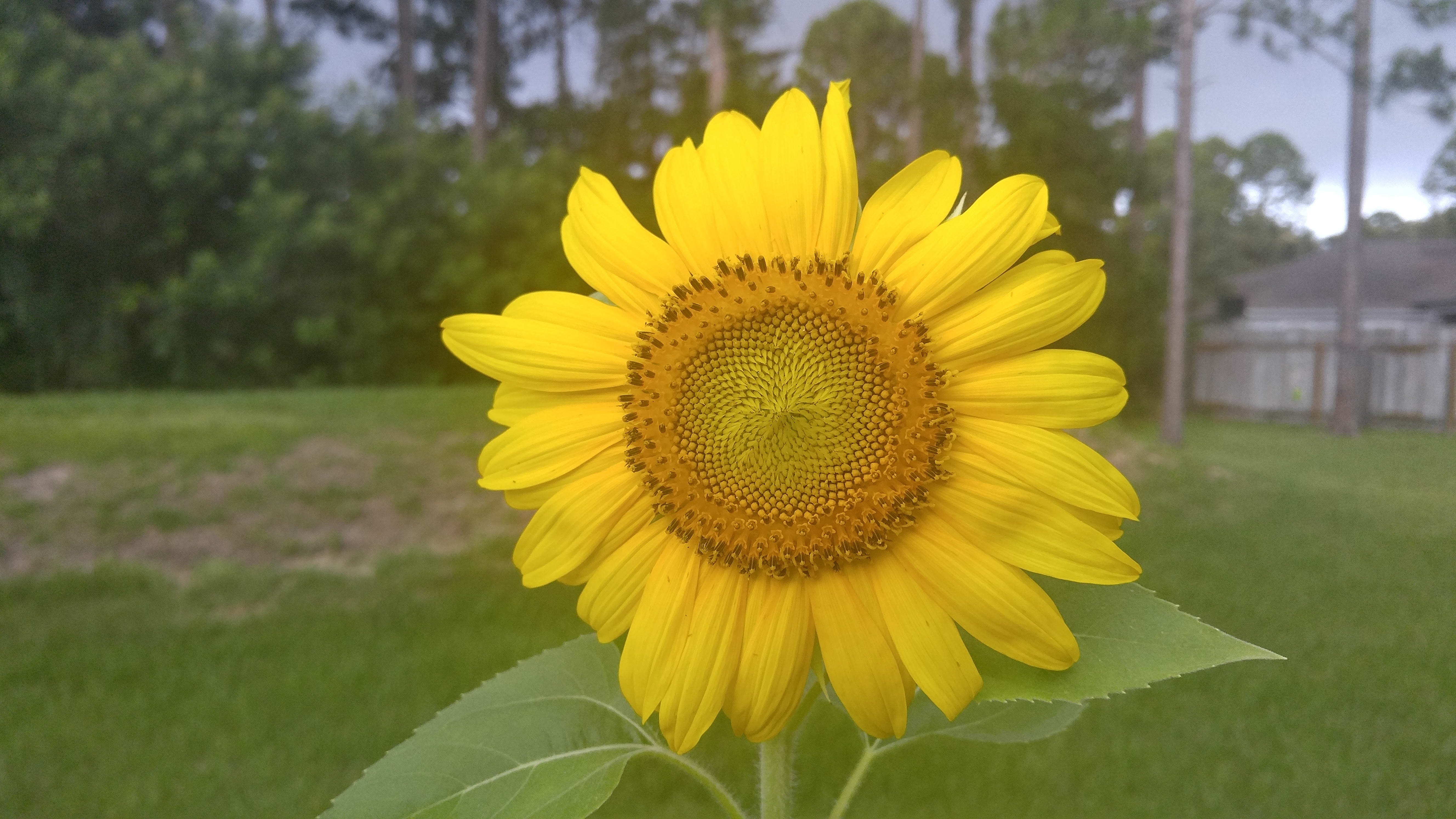
What do you think? Is there a chance one of these blooms might have silently moved my father to dig out his Flowers series and give them all yet another go?
The years of his last renditions for this series seem to coincide with the year I grew enjoyed a sunflower room with my children also in the same place where my father lived.
Maybe it was my father’s way of communicating beyond death that… he saw. He noticed… And maybe he wanted to connect his work with the life he lived, at last, in St. Augustine.
Blessings and All the Love this Sunflower First Sunday of May,
Colleen Noelle